An episode of the discover science podcast
A multimedia story by Katrina Perce
May 20 2025
.
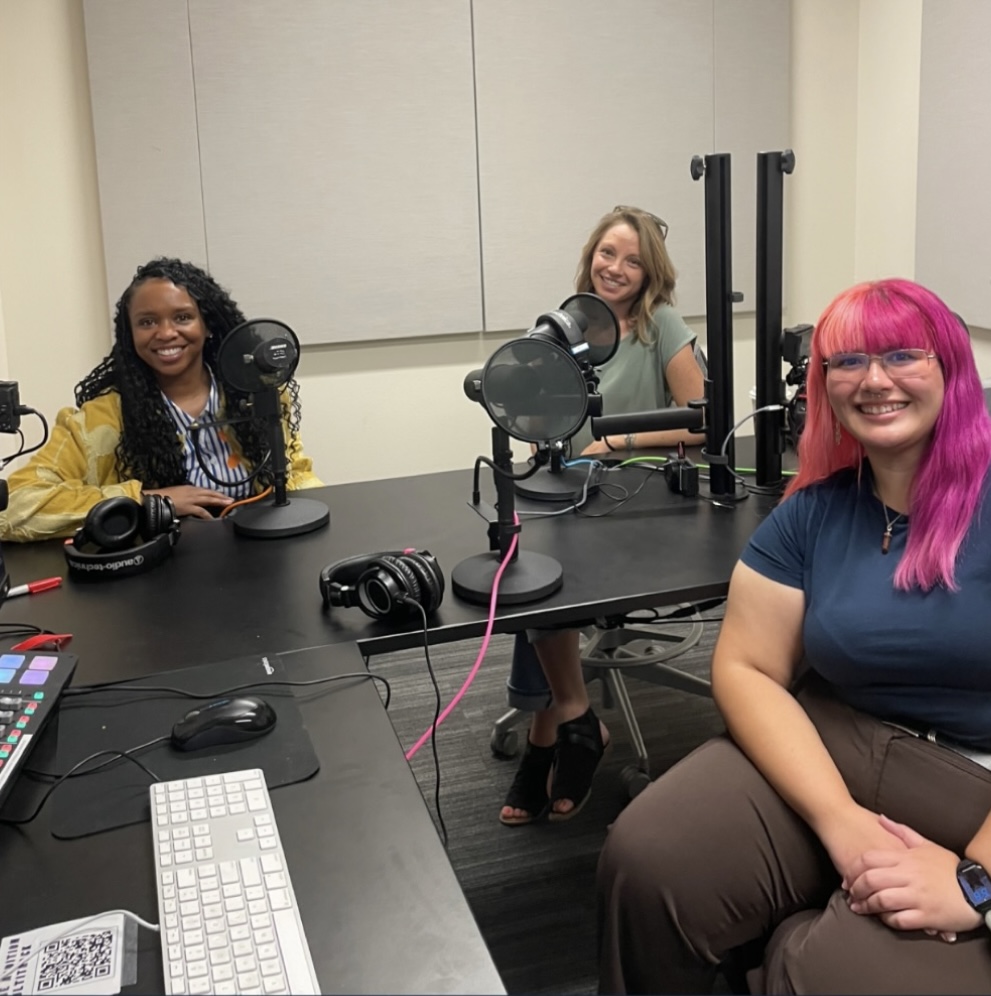
Ice cream – a universally familiar companion. From sitting by the windowsill in first grade waiting to hear the friendly jingle echo down the neighborhood to choosing between the quirky flavors at the local shop after an impulsive late night trip with your friends.
Ice cream is as complex as it is delightful. Unlike other foods, ice cream is a solid, liquid and gas all in one. At the same time, ice cream holds a unique, nostalgic place in the memories of many, bringing people together like no other.
These complexities behind ice cream and frozen aerated desserts are exactly what draws ice cream scientist, Dr. Maya Warren’s fascination. Hear from Dr. Maya and director, writer and producer Page Buono on communicating and visualizing science and how ice cream is actually a sweet outlet for connection.
Audio Transcript
00:00
Katrina: Welcome to the Discover Science podcast from the College of Science at the University of Nevada, Reno. My name is Katrina Perce. I’m a graduate student in the Reynolds School of Journalism, where I’m studying science communication with the Hitchcock Project for Visualizing Science. I’m excited to be hosting today’s podcast, where we’ll be discussing a very sweet topic with guests Dr. Maya Warren and Page Buono.
00:23
Katrina: Dr. Maya Warren is a food scientist with some great chemistry with ice cream. Taking a liking to ice cream at her Missouri high school, Maya earned her B.A. in Chemistry at Carleton College in Minnesota. Maya was inspired to pursue a career in food science after watching Food Network show Unwrapped about what goes into creating some of our favorite foods, like French fries and peanut butter.
00:42
Katrina: After an internship at a cereal company, Maya went on to earn her Ph.D. in food science from the University of Wisconsin-Madison, specializing in the microstructure, sensorial, and behavioral properties of frozen, aerated desserts. Maya’s excitement for science and ice cream is contagious. She shares her love for both as she travels the world making ice cream and other frozen, aerated desserts.
01:01
Katrina: And a quick aside, her love for travel is not restricted to her duties as the ice cream scientist. Maya competed and won in the 25th season of the reality show The Amazing Race with her friend and former lab mate in 2014.
01:11
Katrina: We are also joined by Page Buono, a director, producer and writer at Day’s Edge, an award winning production company, producing documentaries involving science in nature.
01:21
Katrina: Following her degree in environmental journalism at Western Washington University, Page earned her MFA in Creative Nonfiction from the University of Arizona. Alongside writing and producing for the Emmy nominated PBS series Human Footprint, Page is also directed and produced numerous short educational science films, including Frosty Formulations, a film featuring Dr. Maya Warren, her career, and the magic of the science behind ice cream. Page’s creative style brings a bright, fascinating and unique look to science communication through film. Thank you for joining me today, Maya and Page!
01:51
Maya: Thank you.
Page: Thank you for having us.
01:53
Katrina: So, kind of starting off, Maya, you labeled in Frosty Formulations, chemistry as your first love. Can you talk a little bit more about that love story?
02:03
Maya: Yes. So I fell in love with chemistry before I knew it was chemistry. I fell in love with creating and sort of phase transitions of items or foods back when I was just a little kid, but I didn’t really know that making slime was actually doing chemistry. I just thought I was making slime. And so being able to then put that into actual understanding of what I was doing, like when I was in high school and really fell in love with chemistry, is kind of where it really all started, and where the sort of ideas of, wow, this could be something that I could actually do in life.
02:35
Maya: It doesn’t have to just be something that’s like a thing that I like, but it’s something that I can actually apply to my life. And then being able to settle then into the food part of it kind of came after that. But I would say it, it started, I guess, when I was young, but not even really knowing I was actually doing science or chemistry for that matter.
02:54
Katrina: I feel like that’s a lot of things you don’t realize, like behind it, a lot of things around us are actually science.
Maya: Most things are so hard to get it. Yeah, yeah.
Page: Like what isn’t.
Maya: Yes. From your shampoo to the clothes that you wear to the the the watchband, I mean, anything you name it. Like it’s all science.
03:14
Page: Yeah. The whole world. We existed. Yes. Yeah.
Katrina: Kind of getting into more specifics with your work and everything. Can you talk about what makes working with ice cream and other frozen, aerated desserts so fascinating?
03:24
Maya: Oh my gosh. So if you could feel my eyes light up through this podcast right now, I absolutely love the science of ice cream.
03:34
Maya: I really feel like it found me and that I was put on earth to be able to explore it, as well as be able to share it with the world. And one thing that I love most about it is that it’s a relatable science. So people, regardless of your age, you can understand it and it can be broken down for you in a way, and which is not intimidating.
03:55
Maya: As scientists, we often get this sort of stigma of like, oh my gosh, science, like stay away, like it’s really difficult, but it doesn’t have to be. And I love food science and the science of ice cream because it is so approachable. Going deeper into the sort of focusing on ice cream itself, when you say the word “ice cream,” like it puts a smile on everyone’s face, like, let’s just admit.
04:14
Maya: So it’s one of those things that it’s like, okay, I don’t mind learning about that because it’s ice cream. And so the approachability of it is something that I have really fallen in love with even beyond just, of course, me loving the science and me, loving the art of it. I look at ice cream as a blank canvas and it’s awaiting whatever we want to throw at it.
04:34
Maya: And I love for people to be able to think about that and what they want to sort of do and like what can be your blank canvas, what can you sort of design and create in a way in which you might be able to stand, like in a league of your own? Because at the end of the day, I didn’t invent ice cream.
04:49
Maya: I just look at ice cream a little bit differently than most people do. And I think I have a different appreciation for it because I am so close to it. But at the end of the day, it does make people smile. And I think that that’s one of the things I love so much about it.
05:04
Katrina: So kind of related to that, you’re working on some really neat projects. Can you talk a little bit about Ice Cream for Change and why this project’s important to you, what it is and everything?
05:12
Maya: Yeah. So Ice Cream for Change actually came out of everything that was going on back in 2020 with COVID and with the unfortunate incidents in Minnesota with George Floyd and wanting to be able to bring the community together and the ice cream community together in a way in which we could make a difference.
05:31
Katrina: And so my friend and I, Mona, Ms. Mona Lipson, actually is also an ice cream guru. She loves making ice cream. We met on Instagram, had never met each other in person during COVID, and we created Ice Cream for Change as a way for people to be able to come together, serve scoops of ice cream, and people will be able to donate money towards organizations that were looking to really make an impact in social justice and things that needed change.
05:57
Maya: So, it’s not actually just loose change like money, it’s actual ice cream for an important, actual change. And so, through Ice Cream for Change, we also, not even just focusing on like injustices and racial issues. We also want to focus on making an impact with sustainability issues and environmental issues, etc. So, we sort of taken a little bit of a pause.
06:17
Maya: We’re hoping to gear back up actually this year or next year with Ice Cream for Change. We both had a lot of changes in life – no pun intended – we both have had a lot of changes in life. You know, really, it’s been both dear to myself and Mona’s hearts, and so we hope to be able to get back into it. We raised quite a bit of money for different organizations when we launched Ice Cream for Change and so, we definitely hope to get back into it.
06:40
Maya: But it’s important for people to be able to realize that ice cream really has no boundaries. It has no isms. If you go to an ice cream shop and get a scoop of ice cream, no matter who is behind the counter, no matter what they look like, no matter the gender or political values or religious beliefs, you get that scoop of ice cream, you get a smile on your face.
06:58
Maya: And so I love the fact that ice cream really does break those boundaries and those walls. And I think that we can start to really have critical conversations over scoops of ice cream. And that’s what Ice Cream for Change actually does as well.
07:12
Katrina: During that same time period, you talked about like your Ice Cream Sundays on your Instagram Live. Can you kind of talk about that and like connecting to your audience in that way?
07:18
Maya: Yeah. So, Ice Cream Sundays with Dr. Maya actually started during COVID as a
Page: She was very active during COVID
Maya: Yes. Very active. I wasn’t traveling, but I was like, wow, I’m home. What can I do with time? Yeah, it’s a whole nother sort of mindset on how to use time, because we only have 24 hours in a day.
07:36
Maya: We can’t extend; we can’t shorten. But what can you do with that 24 hours is sort of how I approach life. And during COVID, I saw people making sourdough bread, like online all the time. And I was like, really? Like, I mean, I guess, but why are people making ice cream? I was like somewhat offended.
07:57
Katrina: Yeah. Like, why aren’t you making ice cream? Ice cream is so much fun; it puts smiles on people’s faces. Then I realized, oh, well, do people have ice cream makers? Probably not. Not as many people as I think could, and probably not as many as I do. So, I said, well, how can I connect with people through ice cream with them making their own ice cream?
08:18
Maya: Because ever you talk about ice cream, I feel like you have to give it out. Like it’s like rude to talk about it and all the science behind it and then you don’t have it. I’m like, how can you break that barrier? So, I said, I’m just going to teach people how to make no churn ice cream, and I’m just going to start doing it and we’ll see where it goes.
08:36
Maya: And 30 something recipes and episodes later, I created Ice Cream Sundays with Dr. Maya as a way to bring people together during a really hard time like the pandemic, but also as a way for me to be able to share my science with the world. And part of what I have been sort of seeking to do, is to break that barrier of scientists and television, and we don’t see food scientists on TV.
09:02
Maya: We see chefs and we see scientists in other fields. We really don’t see food scientists. And so I think it’s important, as I continue in my journey, to be able to continue to try to get to that next level of how can we show what scientists look like, who we are, how approachable science can really be, and how much science there is behind your food, and how universal it actually is, and how it brings us together.
09:27
Katrina: And I think, I’m going to say this,I think ice cream brings us together like no other food can. And so, Ice Cream Sundays stemmed from that desire, but also people are making way too much sourdough bread it. And I was like, people need to make ice cream. And yeah, I made a lot of ice cream during, during the pandemic. It was actually absolutely wonderful.
09:48
Page: Yeah. Well, I loved what you said. It was such a like relief for parents looking for ways to engage with their kids in the middle of the pandemic, and it was educational but also fun and yeah.
09:58
Maya: I gotta do it again. Like, I miss it and I miss the engagement that you have, even though it’s virtual. I miss that engaging with people and how every Sunday at noon Pacific people showed up. I know! and watch me dance like I cannot really dance. I mean, I have moves, but they’re not good. And, you know, engaged in, in the science of ice cream and ask really cool questions and the one of the really cool things is I actually had people join from, Brazil. I had people join from South Africa, I had people join from Ireland. I had people join from Jamaica, like people from all over the world. And that was the beauty of being able to have something like Instagram, where you can have it all over the world and you can make those connections and so it was it was really, really unique. I miss it.
10:48
Katrina: So, Page, your work claims a deep dedication to science and knowledge and sharing this traditional knowledge and equity in that. Can you kind of talk about why and how you use storytelling to kind of promote the topics that you do care about?
11:01
Page: I think probably sort of the like fundamental way that I do it is through characters, and I think it’s finding people, who are passionate about the things that they’re passionate about, knowledgeable about the things that they’re knowledgeable about, and using them as a way into complicated or controversial or, you know, whatever sort of, facet of information we’re after.
11:21
Page: And I think people make for really compelling stories because people help us move through complicated topics, because their interests are multifaceted. So, we get to approach chemistry through a love of ice cream, a love of connecting to people, a love of vibrant colors and loud music. You know, I think, sort of characters give us the palette that we can use to tell the story.
11:45
Katrina: And I think I guess maybe, you know, sort of thinking about science and traditional ecological knowledge or traditional knowledge. I think, again, it’s people’s deep connection to place, to something they’ve studied, you know, to an area of interest. And it’s just tapping into and giving them sort of the microphone for that.
12:05
Katrina: Can you kind of talk about how you find the people that you feature, like these characters that you do feature?
12:09
Page: Yeah. I mean, gosh, every time it’s a different story, I’ve had a really varied career. So some of it is just, having had opportunities to meet people from really different backgrounds and with really different, expertise and areas of interest. I think, you know, I do a lot of Google searching. You know, we spend a lot of time in the pre-production phase, actually getting to know people.
12:31
Page: So, you know, I don’t we had so many conversations
Maya: so many. like I knew page before I actually ever saw page in real life
Page: Yeah, yeah. We really did. You know and it’s and that’s about kind of what I was touching before but that’s just about finding out like what is going to make this person come alive through the story.
12:48
Page: How are we going to capture these, you know, different facets of who they are? But then also, like, is this the right person for this? Like, Maya was a no brainer, you know, for frosty formulations. But sometimes when we’re looking for characters, it’s like trying to find out, you know, what are they bringing to the table?
13:04
Page: Are they, you know, I think, I’ll touch on this later, but one of the things that we’re learning, Reyhaneh Maktoufi is a scientist. She’s a researcher who looks at how do we build trust in audiences, how do we actually make science communications effective? And one of the things we’re learning is that, both on the side of scientists and, producers of science communications, it’s like kindness and openness and sometimes characters who don’t feel curious, who just feel like really stuck, don’t make the best characters because it doesn’t feel like an in, like you have an in with them.
13:38
Maya: It’s like a wall is there and you can’t quite break that.
Page: Yeah.
Maya: Interesting.
Page: And so, I think like for, for me at least I would say like characters who you feel like you can be in conversation with. And if I’m not like actually talking to them, but just who you feel like you can engage with, they make for really strong characters.
13:55
Maya: And I, I will say, I think as a scientist, we, I’m talking about like we as a scientist in like the science community, we often struggle sometimes breaking that wall.
Page: Yeah.
Maya: And I believe that social media has provided a platform for people to start trying to break that wall without actually having to do it in front of other people.
14:20
Maya: I mean, you are known to other people, but you’re not.
Page: It gives a little bit of a safe distance.
Maya: Yeah, it’s a bit of a safe place. And I think that people have started to use that more, and I hope people continue to use that more. But I love with the work that you do, Page, how you’re able to show that scientists are more than just a lab coat, goggles, you know, staying behind the scenes and that we do have a personality.
14:43
Maya: We are engaging. We are fun. Like, I don’t know how many times people have told me, “Well, I would have never guessed you’re a scientist, by the way you look.” Well, I mean, I don’t know what I look like, but okay. But I love, you know, what you all do at Day’s Edge. And what we were able to do with Frosty Formulations is to show not only the vulnerability of the character, but also the realness, the true, you know, kind of goofy side, or the happy side or the sad or whatever it might be, but all the emotions that people go through because scientists in the day are people.
15:14
Maya: Yeah. We’re not stale. We’re not stagnant. And so I, I love what you all are able to do with that. Yeah.
Page: Yeah, it’s definitely like the primary goal, you know, we want people to engage with and trust science. We want them to feel passionate about it. And scientists are the best. They’re so fun.
Maya: Yeah, we’re we’re cool.
15:33
Page: So it’s just. Yeah, I really like, yeah I’ve never, we’ve never made a film about a scientist who’s like, yeah, I just don’t really have any other interests. They’re always like, oh yeah, well, also, I’m in a band and I also play the, you know, and I’m also learning how to ride bikes backwards.
Maya: Wherever the brain takes
Katrina: So yeah, I completely agree with what you say about just like the image of scientists and everything, seeing the way that you depict scientists and the way that you’re, like personality is so like bright and bubbly while also describing these very complex topics. It’s amazing to see and I really love it.
16:15
Maya: Oh, thank you, thank you.
Page: I think it’s a really exciting time for sci com in that way because I think, we were kind of touching on this earlier, but I just, you know, I understand, like why scientists felt the need to be, sterile, you know, and I think we sort of looked we put this expert halo on, and it was like, if you do anything outside of that, we’re going to question your work, right?
16:32
Page: I think the pendulum has really swung, or, hopefully, I think is swinging on that way. Like we want to see scientists as human. And so I think it’s a really exciting time to be telling stories about scientists and with scientists.
Maya: It makes it more, it makes scientists seem more real. And for the outside world, it makes science seem more approachable when you can start it from the scientist standpoint of how approachable they are, you know, and also with social media, with film and, and all of that, we’re able to, you know, continuously get it out there so people can see.
17:09
Maya: Because, you know, back in the day when people didn’t have as much access, you didn’t know what you could be, you didn’t know what existed. You just thought maybe people just thought things appeared. I’m not really sure. But there is so much science. And I’m going to say with food, because that’s what people, I think don’t realize a lot is that everything you eat, there is a massive amount of science that goes behind it. From the packaging that you open to the food that you put in your microwave, or that you’re making in the hotel room or dorm room, whatever, whatever you’re doing.
17:39
Maya: There’s so much science behind that. And the people that make it happen could be you. You know what I mean? Like that young kid realizing that, oh, I too can be because now exposure is so much greater. I definitely appreciate the times that we’re in right now for that.
17:57
Katrina: So kind of talking about Frosty Formulations, as an artist myself, I love watching it, I watched this several times at this point because it’s just so cool. So, all these like fun, bright scenes, they kind of just like glue you to the screen and you just don’t want to stop watching. I’m watching it with a giant smile on my face. So, you use art in a way to communicate science, and then you’ve managed to visualize, like partial coalescence in a way that people like me, or like other non-science audiences, can understand it.
18:23
Katrina: Can you try to talk about, like, the process behind creating films and stuff and like you’re visualizing these very like complex topics?
18:30
Page: Yeah. Yeah, absolutely. And Frosty Formulations is such a fun example of that. And that summer. So, we made Frosty Formulations, and we also made Cracking Chirality, which is a totally different aesthetic. But I think, you know, from the outset it was like meeting Maya, learning about science.
18:47
Page: It was like, this film has to be bright and colorful, like Maya is bright and colorful and super vibrant and like smiling and high energy and as we learned more about your passions and your interests, it’s like travel. She’s out and about and around shopping, like she wears these vibrant clothes, you know? And so, I think from the outside it was like, okay, aesthetically this thing’s going to be bright and fun.
19:11
Page: And then, you know, we needed animation styles to match that. And so, we worked with a production and animation studio called MK12. They’re really, really amazing. So we knew going into it like, okay, you know, our animations are going to be bright and vibrant. We’re going to shoot it in a really bright, fun, playful way.
19:28
Page: And then when we were developing the idea for partial coalescence, visual metaphor is sort of one of the tools that we have in film. And so we were thinking a lot about, like, how can we show this thing, these things that, that come together, but not all the way together? And, I think we were like, snowballs!
19:43
Page: No? Okay. Can we do we had so many ideas, bubblegum like, and eventually just brainstorming, we were like “bubbles!” And so I found a bubbleologist in LA. That’s a real thing.
Maya: So cool. Right?
Page: A real thing. And we consulted a lot with Dr. Maya, like how are we going to show this, what do we need to show? Found a studio in LA and hired this bubbleologist and filmed, high speed, him creating these bubbles.
20:09
Page: It was actually really complicated. Like getting them to partially coalesce was not something he usually did. So, he’s like, “so you want them to come together, but not all the way, together?” Yeah. And so, we had to try that a lot for a very long time.
Maya: Right? That’s so funny. That’s awesome.
Page: But he was game. Yeah.
20:25
Page: From the outset, you’re just sort of like, how are we making this visually appealing? We wanted it to be on the green screen so that it felt like the bubble just was part of Maya’s world. You know, you don’t want to be sort of like jumping between worlds the whole time. The studio shot of ice cream where it dissolves into the animation was another way that we were like, “okay, we can bring these worlds together.”
20:44
Page: The Cracking Chirality film, we called it like our Barbenheimer Summer because that was like our bright, vibrant film. And then the other one is very Oppenheimer in the sense it’s like he’s super studious, he has like a passion for art history, really academic, really loves West Anderson films. And so, we were as we were developing it with Furkan, who’s the lead scientist in that film, he was like, you know, we were like, okay we’re going to like, make it much more muted tones
21:13
Page: And we want it to feel really like slow and pensive. But we really ask the characters, the scientists, themselves to help us think about what the visual opportunities are.
Katrina: Yeah, I remember watching the film and I was like, how do they how does that work? What’s going on? Like trying to figure out how you filmed that
21:26
Katrina: What’s going on? Like trying to figure out how you filmed that.
Page: And, Maya’s scene in her apartment. You know, we’ve got her, like in this spinner. We’ve got the camera spinning around her. We’ve got, you know, lights and filters, color filters. And then in the studio shot, same story. We made him on the center box and like I would run behind with bubbles, and then David would run behind with bubbles, and they would film and then we’d throw up a little confetti.
21:54
Page: Chaos. That’s how we filmed it.
Katrina: Beautiful chaos.
Maya: But it came together. I remember when you were, when we were sort of talking, you know, through all of our conversations prior to filming and, you know, the ideas that I was like, oh, I mean, I trust you. I don’t quite know how it’s going to come together.
22:09
Maya: But when it came together, I was like, okay, like, this is pretty rad. And even when people saw it, they would say, “oh my gosh, this is so well filmed!” And I said, “I know, like it’s not me, it’s Day’s Edge!” Like I was the character. I mean, you know, I may have made it, you know, vibrant or, you know, whatever my personality.
22:34
Maya: But the way in which you all approached it and then were able to edit and deliver it was so spot on, like it was like the perfect scoop of ice cream. Yeah.
Page: And honestly, you know, like, I think I’ve said a bunch, it’s a team, but it’s like it’s important to me to mention, you know, like Nate Dappen was the executie producer and one of the shooters and absolutely one of the creative minds on it.
Maya: Yes, so creative.
Page: David Hutchinson was another one of the shooters, super creative. Angel Morris was our editor, fabulous, fabulous editor. Sammy Vanpreet was the assistant editor. So, I just got to kind of do some of the writing, directing, creative thinking, but it’s a team.
23:13
Maya: It’s a team, yeah. And it was a team even just to do everything that we did, you know, from you know, rearranging my apartment to make it look like we were in, like, somewhere else, you know what I mean? And, like, just, you know, the way in which a question was asked if I didn’t understand, sort of rearrange, like, kind of connect our minds and make sure I understood so I can deliver it, you know, deliver the answer.
23:31
Maya: It was just really great. It was a really fun way to showcase how cool science can be. Yeah. And I just talk about Day’s Edge all the time and how wonderful a company and how wonderful your minds are, because you’re really able to break that fourth wall of science and sort of the person. And I just really appreciate it. So it was really cool.
23:56
Maya: And I just feel honored that Frosty Formulations featured me, who happens to be an ice cream scientist.
Page: Just happens to be.
Maya: Yeah, just happens to be. But I was just also thinking about we were talking about so the juxtaposition between the two films and, but like, could you imagine if it was swapped and it just like would not work like, like so serious about ice cream. Like, don’t get me wrong, I think ice cream is one of the most complicated foods known to mankind. Like it’s a solid liquid in a gas all in one. Like, it is extremely complex, but it has to be lighthearted and fun. It has to be whimsical in a way.
Page: There’s a whole culture surrounding
Maya: Yeah, if it was like all muted tones, it would be totally different.
Page: It wouldn’t work.
Maya: It wouldn’t have worked.
Page: And I think that’s to like the, that collaborative. I mean, for me, the thing that I love about this job, this career is the collaboration, but I think it’s part of what makes us effective at science storytelling.
24:56
Page: From the outset we were in conversations, the entire film process, we were like, “are we getting this right? What are you seeing that we’re not seeing? Are we explaining this right? I’m going to say it back to you. Did I get it?” You know, and I think that’s not always how folks approach it. But I think what it gives us is the chance to have you shine. You know, to me, that feels like a really critical part of it and something that we might be doing a little differently.
25:19
Katrina: Actually, it goes right into my next curiosity for both of you. What are kind of the challenges of communicating science to non science audiences?
Maya: Yeah, I mean, I think we’ve touched on a little bit of it is that people think that science is sort of not approachable. Oftentimes if you’re not a scientist and that it’s sort of very difficult to understand and comprehend and like, what is science? It’s like this like mystery enigma in the world. And you’re like, “what?”
25:48
Maya: And people, especially with food, as much as food as we eat, and we eat a lot of food as humans, and as much food if you go to the grocery store that you see in every single aisle or bin or whatever. The amount of science that goes into making sure that your cereal doesn’t go stale right after you open it to the not so new, but new way that you, you know, open the Oreo package and you can seal it back up.
26:22
Maya: Like the packaging science behind that. And all the way to the burritos that are frozen in the frozen section to the fruit that’s, you know, there’s so much science in everyday life that I find it difficult that people don’t realize that. I’m like, did you just think that the Cheerio grew out of the ground? I’m just curious, like, and then people realize that they’re like, “oh!” because there’s texture, there’s shelf life, there’s micro, you know, making sure that it like food does not, should not get released.
27:05
Maya: If it doesn’t pass, you know, micro, like there’s all of that that goes into it that I just don’t think that people get. And so I hope that in the work that you do, within the work that we all do, that we can continue to break down those barriers and make it so that science, at its core, becomes a delight for all to enjoy, and not just something that we sort of hold. And then people just consume. But to be able to learn and enjoy it, I think, is something different than just consuming it. Right?
27:39
Page: Yeah. I think, you know, one of the things that we hear from a lot of scientists and recognize and, and work with them on is like, it’s really hard to tell a part of any story. But also no story is the whole story. And I think for so many scientists, so much of the context of their research is really critical. The specific language of their research is really critical. You know, we work with geneticists, we work with biologists in these really niche fields and terminology is really important, but it’s also really foreign.
28:08
Page: And it can be really it can be really isolating for, you know, sort of a more general public audience or science-literate or curious, but not scientist audience. And so, I think one of the greatest challenges, but also what is so fun is really working together to tell a story that is accurate, if not comprehensive, and accessible.
28:28
Page: And so, I think I mean, that’s probably one of the biggest challenges, you’re kind of working across languages and so doing the translation. I think, too, as a science communicator, I think so often we set out or we have clients and it’s like the audience is the general public. That’s like, well, that’s not an audience.
28:47
Page: Like I think the sooner in the process that we define the specific audience, the easier that task of working with a scientist to find out, like, what is the level of literacy we can assume? What is the access point for familiarity? What is this audience going to be motivated by? Where does their distrust exist? Where does the trust already exist? I think that’s also a really helpful aspect.
29:10
Katrina: Kind of on the flip side, then, what makes science communication so fun?
29:14
Maya: Science communication, I think, is so fun for the “AHA” moments that people have, like when you’re talking to someone, whether on an airplane or doing like a guest speaker or anything like that, and people, you see the light bulb go off, I’m like, “yes!” They got it. Like whatever they got from that. Yes, they got it because you can see it. It’s a very human, reaction that people have when they get it and that is so satisfying as a scientist to be able to take all these years of research and deliver it in a way that, seven year old can understand, or a 70 year old can understand, and that, like, I’m getting chills right now just talking about that because that in its little bitty box with a bow on it is the like, perfect point of I’ve done my job because they got it.
30:07
Maya: And I always tell people I didn’t go to school, research ice cream, study ice cream, and get my PhD for me to hold it inside. It’s for me to be able to share with the world. And when the world, “the world” gets it, when that light bulb goes off, that is one of the most rewarding and gratifying things within the world of being a food scientist.
30:29
Maya: And in that whole statement that I just said I didn’t say anything about, like doing research, it was about me verbalizing or being able to do the experiment or create with the person. And I think as scientists, we need to do more of that and that it’s not for us just to stay behind, you know, the four walls and all of that, it’s for us to be able to break that fourth wall and to be able to have that engagement. But that moment is everything for me. Yeah, I love it.
31:00
Page: It’s funny because I would say, like, entirely selfishly, the most fun for me is that I get to have that “AHA” moment over and over and over and over.
Maya: I love it.
Page: Yeah, when mom was like, “what do you want to be?” I’m like, I don’t know. I want to get to ask people questions and learn always. Journalism, you know, sort of became that. But I think so entirely selfishly, like in the filmmaking process, it’s that it’s that I get to be like, oh, explain it a different way. Try again. And is this right? Am I getting there or am I sort of understanding, you know, and then when you get it, it’s like it’s so rewarding.
31:32
Page: And then I think similarly either when an audience says, like, “I understood that in a way,” or “oh my gosh, that was amazing. I’m engaged.” But then also when characters and I would say scientists, but this is true of any storytelling when they’re like, “I feel well-represented.” That for me is like, oof, like, yeah, thank you. You know, and really, really, really rewarding. And the nature of this work is just really cool. I feel like I absolutely hit the jackpot. I travel a lot and get to be in weird, surprising situations and meet new people who are passionate about the thing they do all the time. And yeah, just constantly learning.
32:12
Maya: We are drawn in various ways, addicted to those feelings, you know, those endorphins running through our body and all of that. Like we love that. And so, when that “AHA” moment comes from knowledge, like you’ve really got something special there. And because “AHA” moments are that same feeling that comes from eating something really good or seeing a long lost friend and like building up all those emotions.
32:37
Maya: But when science and knowledge can stem that emotional reaction, it’s really special. And I somewhat selfishly, am going to say that when people can get it through ice cream in, it makes it that much more special, because ice cream has something that a lot of other foods and/or science does not have. And that’s the nostalgia aspect of it.
33:05
Maya: If you think about ice cream when you were a little one, whether running for the ice cream truck on your street because you heard the music or going with your family or whatever, friends and getting ice cream late at night on a hot summer day, or, you know, cozied up under a blanket and eating ice cream, or maybe eating ice cream with, like, your grandparents. Maybe they passed away or some memory. We all have it.
33:27
Maya: And so I believe that ice cream draws up the nostalgia aspect in us, as well as those “AHA” moments through the art and science of it. And so for me, that complete sort of box, that collaborative box of all of those entities coming together is what a scoop of ice cream actually is. It’s wonderful. It’s really cool.
33:49
Katrina: Well with that then, you, kind of, with your work like have integrated like your love for ice cream, everything into so many different parts of your life. And in the same way you kind of do the same, where you’re combining your art with science and having the thing you love be part of your job.So, do you both have any advice for maybe like young scientists or young communicators that maybe want to incorporate the things they love into their future careers?
34:14
Page: It’s funny because Maya was telling a story about, you know, her six-year-old self.
Maya: Yeah, bright-eyed, bushy-tailed Maya
Page: Yeah, who first encountered ice cream. And I think similarly I have, you know, my roots in journalism, I studied Nellie Bly when I was in fifth grade, and she was this journalist in the late 1800s, one of the first women to travel the world. And she reported on the injustices in an insane asylum. She feigned insanity so she could report on the injustices inan insane asylum. And that just, I don’t know, she stuck for me.
34:46
Page: It was like, I want that. I want to be able to go investigate things and explore things and learn things and I had a mentor, flash forward, Jeff Luck is his name at Jackson Wild Summit. And he was like, I told him that story and he’s like, “you’re doing the thing you were doing that you knew you loved when you were eight,” he was like, “you’re gonna be fine, you’re gonna figure it out.”
35:05
Page: And so I think there is something about tapping into the you before it was told it could or couldn’t do things. The you before it was told that there were smart choices and bad choices and the you that was just gut reacting to what you moved toward, you know, and I really think there’s something there.
Maya: It’s special, it’s real and it’s raw.
Page: Yeah. I think it’s worth trying, motivating to move toward.
25:31
Maya: I would say that, similar to what Page is saying, you know, really follow where your inner passion meets that outward doing. And you don’t have to know today. And it’s forever evolving. Yes, I love ice cream. Like it’s my world. What do I do with it?
35:49
Maya: I could own my own ice cream company. I could think about ice cream all day and eat it. I could draw, I can’t really draw, but I could draw, I could write music about. I mean, so many things you can do with it. So what is it that if you don’t invent something, how do you reinvent it so that it becomes yours?
36:08
Maya: And to not put the pressure on yourself to just let it come because it’ll come and it’ll come sometimes as least expected. From bright-eyed, bushy-tailed six-year-old, you know, little girl never knew that I would become an ice cream scientist. And actually, I even know what an ice cream scientist was.
36:25
Maya: I just kind of made it up and said, I’m going to become this. And my parents were like, what? Like, what are you doing? I was like, don’t worry, I’ll be happy. And they’re like, are you… okay?
Page: Like one important thing.
Maya: Yeah, that was that for me, that was the box was to be happy. But I would also say to, you know, make sure to reach out and network and, you know, all of that. Like, I know people hear it all the time, but it is really, really, really crucial. And with social media and LinkedIn and all of that these days, like it’s so much easier to network than it was like 20 years ago. Like it’s so much easier and so just, you know, if, you know, if you think something’s not for you, just try it.
Maya: Like, you never know, like what do you have to lose? But a little bit of time maybe. But in that time what do you actually gain? And I’d also encourage people if there is a situation or a job or anything like that, that you’re in that you’re like, oh, like, this was not really worth it. Believe you me, it was always worth it.
37:20
Maya: You have to ask yourself, what did you learn during it? I had an internship that I was like, oh Lord, what in the world? This is not for me. But you know what? It was the best internship I ever had because it taught me what I did and did not want to do. So, what can you gain from a situation that you can’t see the positive in it yet?
37:40
Maya: Turn it into the positive for you because you did it. You can’t take that. You can’t take that back. But I would, you know, agree, again, agree with page in that, you know going back to that core. Like what lit up your eyes. What made your tube socks go up and down in the first place? Because that is real. It is authentic. It is you.
Maya: And don’t do it just for the money. I’m going to tell people that like don’t like follow, follow, make sure what makes you smile. It makes your eyes light up, find your ice cream.
38:04
Katrina: So to close, you both travel a lot. You both have been to many different countries. Do you have an ice cream flavor that reminds you of the feeling of traveling?
38:17
Maya and Page: Ooh.
Page: he first thing that came up for me was just like mango. Because mango Helados, like in Mexico, are just like one of those foods that I love so much there.
Maya: So I think that I’m going to give you an answer, but I’m gonna switch it up a little bit. For me, it is the ingredients. And to make the flavors that make it for me and depending upon where you are, will depend upon kind of what ingredients they’re using. Like some places, like in Italy, they’re using cream of the crop, freshness of the fresh because they have access to it. And the cost is not so much to be able to make that beautiful gelato.
38:57
Maya: Or you go, for instance, I was in Thailand last year and I was on a long boat in a floating market. And there’s a lady, you know, not riding on it, right? Like floating down in her boat, you know, selling coconut ice cream in an actual coconut. Yeah. Very, very special, very delicious. Very demure.
39:20
Maya: Like, for that and the story behind her that creates the ice cream for me, it’s the people in the food and the ingredients and the history behind creator that that sort of, I carry along with me more than just the ice cream itself, because ice cream is so much more than just ice cream. It is the creator. It is the story.
39:40
Maya: It is the hardship and the passion. Behind how that scoop became that scoop. The Thailand one is a is a great example, I would say, of that along with, you know, just seeing young kids eat ice cream for the first time and yeah, or like a really enjoy, like it’s very special. Like it’s like, like look at that.T hey love ice cream. I love it. So yeah, I’m answering your question in a very roundabout way, but I would say it’s very layered for me.
40:11
Katrina: I want to thank you so much for coming on here for the Discover Science podcast. It was so great meeting you and getting this opportunity to just talk about science and talk to people that are so inspired by it, are so excited about people in general. So thank you so much for your time and everything.
Maya: Thank you!
Page: Thank you for such thoughtful questions, it was a pleasure.
/End
 Katrina Perce